
 Artists
 DJs
 Comedians
 Music Bands
 Live Musicians
 Dancers & Choreographers
 Anchors & Hosts (Emcees)
 Influencers & Content Creators
 Wedding Planners
 Decor & Design
 Sound & Lighting
 Venues
 Logistics & Rentals
 Caterers
 Makeup Artists
 Photographers & Videographers
 Fashion Designers
 Wedding Wear
 Jewellery
 Hospitality Staff
A manufacturer wants to know why its distributors still call the area sales manager to check delivery dates when the same information is available in a portal. The sales director suspects a training issue. The product team is ready to improve the screen. Before either team spends money, it would help to hear a distributor describe the last order that went wrong. That is a question worth bringing twelve people together to discuss.
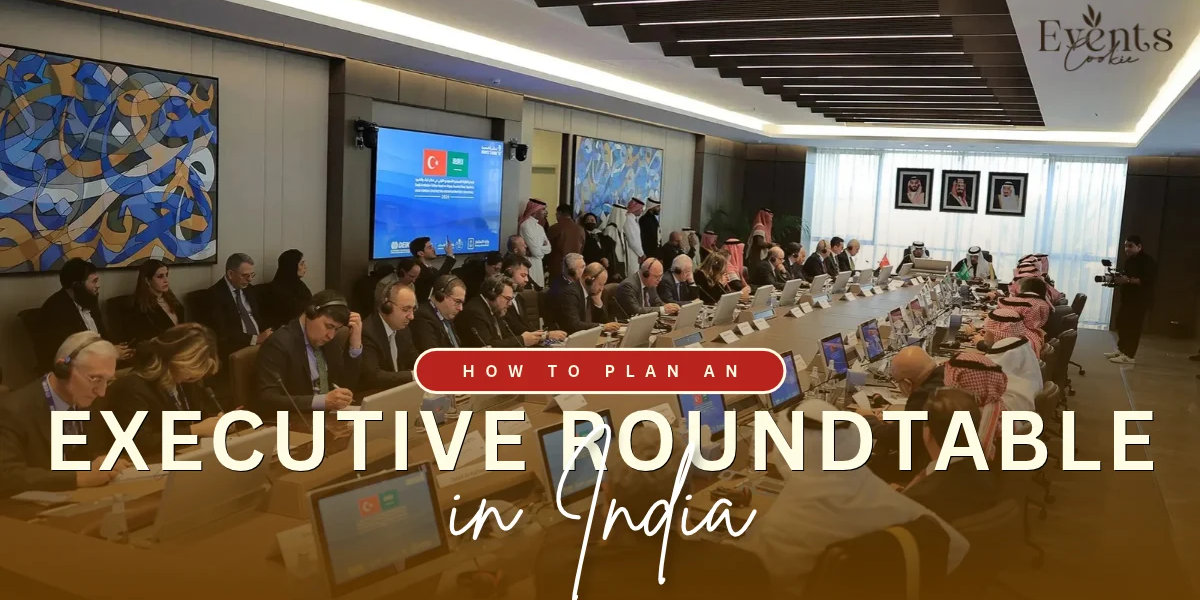
An executive roundtable is a small, moderated corporate event where invited guests exchange first-hand experience around a shared business question. For this example, the host wants to leave with one decision: which change should the company test first? That decision shapes the guest list, invitation, seating, agenda and budget. You can use the same approach for a customer council, a partner breakfast or a leadership discussion.
Planning a corporate roundtable in Chandigarh, Mohali, Delhi NCR or another Indian city? Share the proposed date, guest profile, discussion topic and budget with Events Cookie. We can put together a proposal covering the venue, hospitality, production and guest coordination you need.
Events Cookie Private Limited
Call · +91 9855555352
Email · contact@eventscookie.com
Office · 6th Floor, C-205, Phase 8B, Industrial Area, Sector 74, Sahibzada Ajit Singh Nagar (Mohali), Punjab 140307
Website · www.eventscookie.com
Discuss an executive roundtable with Events Cookie on WhatsApp
1. Choose one question that earns a place in the diary
“Discuss digital transformation” gives a busy guest little reason to travel. “When a promised delivery date changes, how does the right person in your business find out?” invites an answer grounded in experience. A distributor can answer it without preparing slides or sharing commercial figures. A host can listen for something specific enough to change.
Write the question alongside the decision your company can actually make. For the manufacturer, the question is how partners learn about delays. The decision might be whether to test an alert, change who receives it or change when the portal updates. Say who owns that decision. If no one in the room can act on the answer, find a senior sponsor who will review the findings and give guests a date for that review.
A roundtable works particularly well when participants have something to learn from each other. If most of the programme is a product launch, demonstration or business update, allow a separate period for that and describe it honestly on the invitation. Guests who accept an invitation to exchange experiences should have enough time to do so. For broader events with exhibitions or demonstrations, see Events Cookie’s customer meet planning guide.
2. Build the guest list around experience
For the worked example, invite twelve external guests and seat three hosts with them: a decision-maker, a moderator and a person taking notes. These numbers are a planning choice. They let everyone contribute during a 90-minute session and give the host several perspectives without putting a large company delegation across the table from its customers.
Ask account managers for people who have handled the situation recently. A business owner may sign the purchase order, while an operations manager deals with the delivery exception. Both can add value, but they answer different questions. Invite a mix that makes sense for the decision: a newer partner, an experienced one, a high-volume branch and someone who works with a small team. Keep a short reserve list of people with comparable experience.
Give invitations a named owner. When twelve different account managers each promise “one seat plus a colleague”, a carefully planned table can double in size. Tell guests whether substitutes are welcome and which experience would be most relevant. If extra people would add more value than the room can handle, offer a second sitting with the same question. Comparing what emerges from two discussions can be more informative than squeezing extra chairs into the first.
3. Send an invitation a guest can answer in a minute
Sample invitation for a customer roundtable
Subject — Invitation to a distributor breakfast on delivery updates in Mohali
We’re inviting twelve distribution leaders to a breakfast discussion on [date] at [venue]. We’d like to understand how your team handles delivery-date changes and which update would make the biggest difference. Our operations head will join the discussion and use it to select one improvement for a pilot.
Breakfast begins at 8:30 am. We’ll start the discussion at 9:00 and finish at 10:30. Please bring one recent example you’re comfortable sharing. No presentation is needed. We’ll circulate a short summary of themes afterwards and check with you before quoting you by name.
Could you confirm by [date]? [Name and number] can help with directions, dietary preferences and access arrangements.
A guest can see why they were chosen, what is being asked of them and when they can leave. Send the actual venue map pin once confirmed, together with the entrance name, floor and parking or drop-off instructions. For a Chandigarh–Mohali breakfast, ask guests which offices or industrial areas they will be travelling from. For a Delhi NCR event, do the same before choosing between Delhi and Gurugram. A central point on a map may add an inconvenient journey for nearly everyone on your list.
Get help with the venue and guest arrangements
4. Choose a room where everyone can hear each other
At the venue visit, take the chair furthest from the proposed moderator. Ask a colleague to speak from the opposite end while the air conditioning is running and the service door is in use. If you have to lean forward to catch the words, try a shorter table, a quieter room or suitable microphones. A well-dressed boardroom that swallows half the conversation is an expensive mistake for a listening event.
A single oval or rectangular table suits this example. Put the moderator near the middle of a long side, where they can make eye contact with quieter guests. Seat the company decision-maker among the customers and place people from the same company apart where practical. Give the note-taker a view of the whole table and leave enough space behind occupied chairs for guests to come and go comfortably.
Ask the hotel when tea will be poured, where used cups will go and whether an adjacent room has amplified music booked. Serve breakfast before the discussion or plan a deliberate service break. A server leaning between two people to clear plates may be enough to interrupt the most candid exchange of the morning. Give the banquet captain the running order and one contact who can approve a change.
If one executive must join remotely, test the experience from their end. Can they hear a guest two seats away from the microphone? Can they see who is speaking? Appoint someone to watch for their contributions. When the budget or equipment only allows for a laptop at the far end, a separate follow-up call with that executive may give them a better chance to contribute.
5. Use a 90-minute roundtable agenda
The example below starts after breakfast. A few protected minutes at the end are essential because guests need to hear what the host thinks it learned and have a chance to correct it.
| Time | What happens | What the moderator needs |
|---|---|---|
| 9:00–9:08 | Welcome, purpose and ground rules | Name the decision owner and explain how comments will be recorded and shared. |
| 9:08–9:20 | One-minute opening round | Ask each of the twelve guests for one recent experience. Let them pass if they prefer. |
| 9:20–9:45 | Explore two contrasting examples | Trace what happened, who knew first and where information stopped moving. |
| 9:45–10:05 | Compare possible changes | Ask who benefits from each option and where it might fail in practice. |
| 10:05–10:20 | Prioritise a pilot | Invite each guest to name a priority privately, then discuss differences. |
| 10:20–10:30 | Read back conclusions and next steps | Check the wording, identify open questions and give a follow-up date. |
The most valuable part may be a disagreement. A large distributor might want every update sent to a central operations desk. A smaller business might need the same message sent directly to its owner. Ask each guest to explain who would act on the information. The host might discover that recipient choice matters more than the communication channel. Record both conditions before choosing what to test.
Three questions for the moderator to keep on the table
- “Can you take us through the last time this happened, from the first call to the resolution?”
- “Does anyone handle the same situation differently? What makes that work in your branch?”
- “If we could change only one part of that process this quarter, which would save your team the most time?”
Avoid filling silence by answering your own question. Give people a moment to think. If one participant dominates, thank them for the example and invite a different perspective from the other end of the table. If a specific customer complaint needs individual attention, write down the issue with permission, assign a contact and arrange a separate conversation. That gives the guest a route to resolution while preserving the rest of the group’s time.
Ask Events Cookie to help plan the agenda and room setup
6. Build a budget your purchase team can compare
For a small corporate event, the room minimum and fixed supplier charges can matter more than the guest count. The following budget is an illustrative planning exercise for a local breakfast with twelve customers and three hosts. Replace every figure with a current written quote for your city, date and venue. Amounts are in Indian rupees.
| Budget line | Illustrative basis | Amount |
|---|---|---|
| Private meeting room | Half-day room hire | ₹24,000 |
| Breakfast and refreshments | 15 people × ₹1,600 | ₹24,000 |
| Basic audiovisual support | Screen, connections and technical assistance | ₹9,000 |
| Moderator | Preparation call, question guide and session | ₹18,000 |
| Guest coordination and event management | Invitations, confirmations, supplier briefing and on-site coordinator | ₹14,000 |
| Table stationery and signage | Name cards, discussion sheets and entrance sign | ₹3,000 |
| Local guest transfers | Allowance for requested pickups | ₹8,000 |
| Subtotal | ₹1,00,000 | |
| Planning reserve | 10% of subtotal | ₹10,000 |
| Illustrative budget before applicable taxes | ₹1,10,000 |
This example assumes an in-house note-taker and no overnight stays, photography or recording. Ask whether the room is billed separately or waived against a food and beverage minimum. If a hotel quotes ₹45,000 as a minimum spend inclusive of the room, ask for the menu and inclusions before adding a separate room charge. Ask for applicable taxes and service charges on each proposal so procurement can compare the total payable.
Guest cancellations change some costs and leave others fixed. Suppose three guests withdraw before the catering guarantee deadline, and the venue accepts a reduction of three covers at the quoted ₹1,600 each. Food costs fall by ₹4,800. The room, moderator and coordinator still cost the same. If the venue has already locked the guaranteed count, that saving may be zero. Put the final adjustment date beside the RSVP deadline.
For internal approval, record who pays each line. A company driver may cover one transfer, a hotel package may include the screen and a regional director may agree to moderate. Revise the estimate when the scope changes. The point is to show what it will cost your company to deliver this particular meeting. Events Cookie’s wider corporate event budget guide
Request an itemised corporate roundtable proposal
7. Decide what guests will hear from you afterwards
Give the note-taker four headings before the event: what happened, who it affected, what change was proposed and what remains uncertain. Ask them to capture a concrete example under each theme. “Communication needs improvement” is hard to act on. “Branch staff learned about the delay only after the customer called” gives the operations team a place to start. Confirm the wording in the room while the people who described the problem are still there.
Within two working days, aim to send a short thank-you and the themes you heard. Keep sensitive details out of the group email and follow the attribution arrangement you agreed with guests. If someone offered to introduce a colleague or supply an example, write to that person separately and explain what would help. Give the internal decision owner a deadline for reviewing the proposed pilot.
A useful second message can be as short as this: “You told us revised delivery dates often reach the owner but miss the person who speaks to the customer. We are testing a second notification contact with three volunteer branches. Our operations lead will share what we learn by [date].” Participants can see where their time went. If the company decides against an idea, explain the reason and name the question still open. That reply is often more valuable than a polished highlight video.
How should you measure the event?
Agree on a small set of measures before sending invitations. Attendance measures whether the invitation and arrangements worked. Participation measures whether the room gave people a fair chance to contribute. The strongest measure for this example is whether operations made a decision and whether guests received the promised response.
| Question after the event | Evidence to review |
|---|---|
| Did the right people attend? | Invited roles and regions compared with the actual guest mix |
| Did several perspectives shape the discussion? | Examples from different account sizes, teams or regions |
| What changed because of the meeting? | A pilot approved, a proposal revised or an assumption ruled out |
| Did the host keep its commitment? | Date the follow-up was promised and date the update was sent |
Frequently asked questions about corporate roundtables
How many people should attend an executive roundtable?
For the single-table format in this guide, twelve guests and three hosts fit a one-minute opening round and leave time for discussion. If twenty-four guests need airtime, consider two facilitated tables or two sessions. Give both groups the same core question so the host can compare the findings.
How much does a business roundtable cost in India?
The worked example comes to ₹1.10 lakh before applicable taxes for fifteen people, including a planning reserve. It is a sample budget, not a market average. The private room minimum, hospitality, moderation, transfers and the equipment already at the venue determine your own figure.
Should the CEO or a professional moderator lead the session?
Choose someone who can listen, ask follow-up questions and bring quieter participants into the conversation. A CEO can open the meeting and commit to the next step while another person moderates. If customers might hesitate to criticise a process in front of its owner, that separation can help.
Can a sponsor take part?
Yes, if guests know who the sponsor is, why they are present and what they will receive. Define whether the sponsor has a seat, a short welcome or visibility on the invitation. Agree separately on access to contact information, comments, images and follow-up. Make those arrangements clear before guests accept.
Should we record or photograph a roundtable?
Decide what the recording or photograph would be used for and tell guests in advance. For a candid customer discussion, written themes and an optional group photo after the session may be sufficient. If recording is essential, agree who will have access, whether remarks will be attributed and how guests can raise concerns.
What makes a proposal useful when comparing event planners?
Ask each planner to quote against the same headcount, date, agenda, room layout and hospitality requirements. Request a list of inclusions, exclusions, supplier commitments, cancellation terms and who will be present on site. You can then compare like quantities and see who is responsible for each part of the morning.
Send your corporate event brief
We are planning an executive roundtable in [city] on [date or preferred week]. We expect [number] external guests and [number] hosts. Our discussion question is [question], and the person who can act on it is [role]. We need help with [venue / invitations / moderation / hospitality / on-site coordination]. Our budget is [range, with tax basis], and we need a proposal by [date].
If the brief is still taking shape, start with the question and the people you would most like to hear answer it. Those two details will help us recommend a room, agenda and budget that suit your meeting.